
A containerized UF system packages advanced ultrafiltration treatment inside a standard shipping container, giving you fast, plug‑and‑play water treatment capacity wherever you need it. If you are planning an expansion, facing a temporary water quality issue, or need treatment at a remote or industrial site, talk to our team today to evaluate whether a containerized UF system is the right fit for your operation.
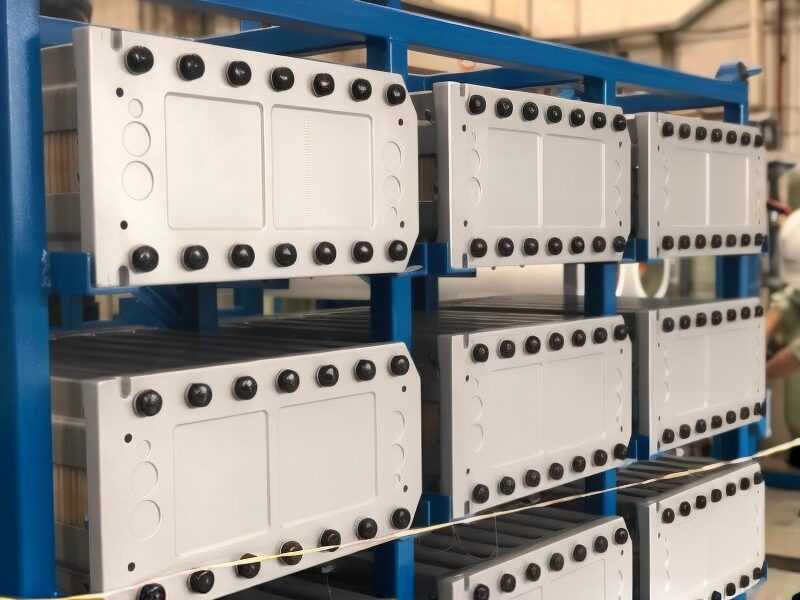
What is a containerized UF system?
A containerized UF system is a complete ultrafiltration plant pre‑assembled inside an ISO container, including membranes, pumps, controls, chemical dosing, and electrical panels. Feed, product, and drain connections are brought to simple tie‑in points at the container wall so the system can be dropped on site, connected, and started with minimal civil work. These systems are engineered for municipal, industrial, and utility applications where reliable removal of suspended solids, bacteria, and many viruses is required. Typical configurations are available in 20‑foot and 40‑foot containers and can deliver flows from hundreds of gallons per minute up to several million gallons per day when multiple containers are combined.
Ultrafiltration uses hollow‑fiber or tubular membranes with very fine pores to physically screen out particles, colloids, and microorganisms, producing consistently low‑turbidity water even when the raw water quality fluctuates. Because the separation is based on size exclusion rather than media depth filtration, UF often achieves higher and more stable log‑removals of pathogens and suspended solids. Containerizing this technology turns what used to be a permanent building‑based installation into a mobile, factory‑tested asset that can be deployed where and when you need it most.
Plug and play convenience
One of the biggest strengths of a containerized UF system is its plug‑and‑play nature. The equipment is pre‑engineered, pre‑wired, and pre‑plumbed at the factory, which means the full process train is assembled, tested, and optimized before it ever reaches your site. Onsite, your team typically only needs to provide a prepared foundation, power supply, and connection points for feed water, treated water, and waste streams.
Because of this high degree of pre‑integration, installation and commissioning times are dramatically shorter than traditional stick‑built systems, often measured in days instead of months. This rapid deployment is particularly valuable in industrial turnarounds, emergency response, seasonal production increases, or when a project must go online ahead of permanent infrastructure. Many containerized UF units also include automation with remote monitoring and control, reducing operator burden and simplifying integration with plant SCADA systems.
Key plug and play features
- Factory‑assembled, piped, and wired treatment train.
- Simple tie‑in points for inlets, outlets, and drains at the container wall.
- Pre‑tested performance before shipment for faster start‑up.
- Integrated chemical cleaning (CEB/CIP) and clean‑in‑place tanks and dosing where required.
- Automated controls with options for remote diagnostics and control.
Typical EDI process train
A common high‑purity system design positions EDI downstream of multiple pretreatment steps. A simplified process might look like this: media filtration and softening (if needed), followed by cartridge filtration, reverse osmosis, and then EDI for final polishing to ultrapure levels.
EDI is sensitive to certain foulants, so upstream treatment is tailored to control hardness, organics, particulates, and carbon dioxide to protect the EDI modules and maintain performance. With the right pretreatment and monitoring, EDI systems can deliver stable water quality with minimal operator intervention over long operating periods.
Modularity and scalability
Containerized UF systems are inherently modular, which makes them easy to scale as demand grows. Each container represents a defined capacity “block,” and additional containers can be added in parallel to increase total plant output without redesigning the entire system. This building‑block approach is ideal for facilities with uncertain future water needs or phased expansion plans.
Because the modules are standardized, spare parts, maintenance procedures, and operator training are simplified across the fleet. Modular design also enables staged upgrades of existing plants: containerized UF units can be temporarily or permanently connected to current infrastructure, allowing portions of a facility to be upgraded without interrupting supply. In many cases, modular units can be relocated or repurposed as operations move or as water sources change, preserving capital investment.
Typical modular configurations
|
Aspect |
Example for containerized UF system |
|
Single‑container duty |
Stand‑alone treatment for remote camp, small industrial process, or pilot line. |
|
Multi‑container arrays |
2–6 containers manifolded together for municipal or large industrial flows. |
|
Temporary bridge units |
Short‑term capacity during plant upgrades, with tie‑ins to existing tanks and pumps. |
|
Mobile fleet |
Rental or shared assets moved between projects as needs change. |
Mobility, footprint, and applications
By packaging treatment inside a standard shipping container, a containerized UF system offers a compact footprint and excellent mobility. Containers can be craned into tight spaces, stacked to save real estate, or placed outdoors on a simple concrete pad or steel frame. This makes them particularly attractive where indoor space is limited or building a permanent plant room is cost‑prohibitive.
The robust container enclosure protects the process equipment from weather and can be insulated or air‑conditioned for harsh environments. These characteristics have led to strong adoption in remote operations, construction sites, and locations with challenging logistics. Industries and use cases that commonly rely on containerized UF systems include:
- Municipal and regional utilities needing temporary or supplemental treatment capacity.
- Power generation facilities requiring reliable low‑turbidity feed for downstream RO and boilers.
- Oil, gas, and mining operations in remote or temporary camps.
- Food and beverage plants looking to standardize process water quality across multiple sites.
- Greywater reuse for agriculture or aquifer recharge using modular UF skid containers.
Operational and lifecycle advantages
Beyond the obvious convenience, containerized UF systems deliver meaningful operational and lifecycle benefits. The compact, self‑contained design reduces onsite construction, which can lower installation costs significantly compared with permanent facilities. Shorter project timelines and reduced permitting complexity also translate into earlier revenue generation and less disruption to existing operations.
Ultrafiltration itself provides consistent, high‑quality effluent even when influent quality varies, improving downstream process stability and reducing chemical consumption in many applications. Membrane systems are typically fully automated, with programmable backwash, chemical cleanings, and alarms that help maintain performance and extend membrane life. Containerized layouts are designed for maintenance access, with double doors, service aisles, and centralized instrumentation to keep routine work safe and efficient.
Summary of key benefits
- Reliable removal of suspended solids, bacteria, and many viruses.
- Minimal civil works and no dedicated plant building required.
- Rapid deployment and commissioning for urgent or time‑sensitive projects.
- Modular expansion as flows increase over time.
Enhanced flexibility to relocate, repurpose, or rent equipment as needs change.
When does a containerized UF system make sense?
Choosing the right solution depends on your process needs, site constraints, and project schedule, but there are some scenarios where containerized UF is often the best fit. If your site lacks existing building space, requires treatment in a harsh or remote environment, or must maintain production while existing facilities are upgraded, containerized systems can bridge the gap with minimal disruption. They are also ideal where future water demand is uncertain; you can start with a single container and add more units as capacity requirements grow.
In large industrial facilities, containerized UF units often serve as pretreatment for reverse osmosis, polishing filters, or process water systems, protecting downstream assets and improving overall reliability. For utilities and industrial operators who value standardization, deploying the same containerized UF “platform” across multiple sites simplifies lifecycle management, spares, and operator training. An initial engineering review of your raw water quality, target effluent, footprint, and schedule is usually enough to determine whether a containerized UF system is the right approach versus a conventional, building‑based plant.